
After 11 Years, My Wife Moved to the Guest Room Because of My Snoring. This Is What I Tried Next.
I never thought of snoring as a “real” problem until the night Linda picked up her pillow and walked out. Here is the whole story, including the things that didn’t work.
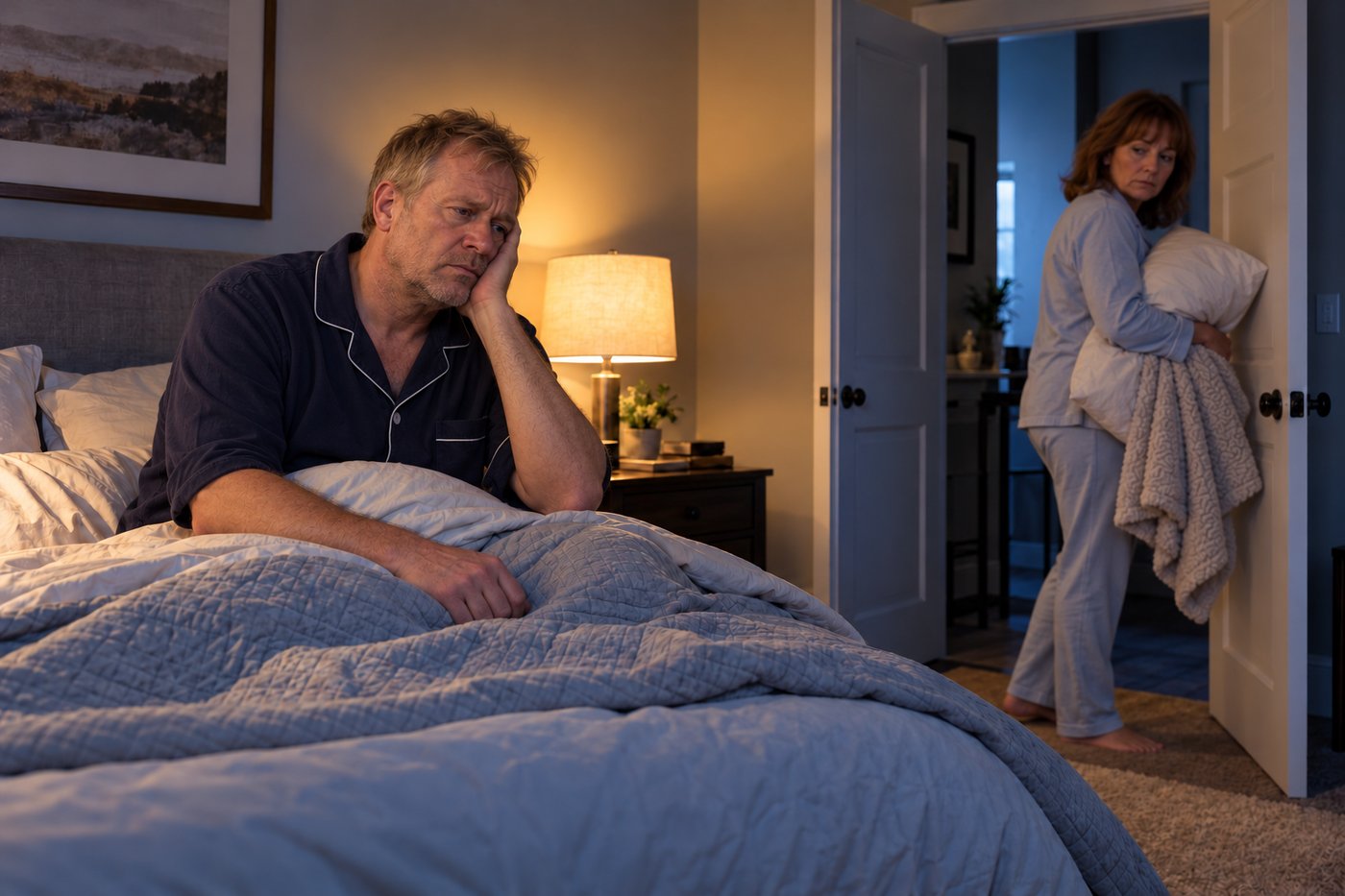
The night she picked up her pillow
It was a Tuesday, around 2 a.m. I woke up to Linda sitting on the edge of the bed with her pillow already in her arms.
“I love you,” she said, “but I have to be up at six, and I haven’t slept more than four hours in a row all week.”
She wasn’t angry. That was the worst part. She was just tired in a way I recognized from years of watching new parents, and I was the reason.
I told her I understood. Then I lay there in a very quiet bedroom and felt about two inches tall.

It was never just the noise
For years I had treated my snoring as a punchline. The kids joked about it. My brother recorded me once on a camping trip and played it back at Thanksgiving. I laughed along.
But when the jokes stopped, the real effects showed up:
- MorningsLinda dragging herself to the kitchen after a night on the guest-room mattress, and me pretending not to notice.
- TravelI started turning down trips with friends and family because I didn’t want to share a room.
- AfternoonsI was foggy too. I figured it was just age. Looking back, I wasn’t sleeping all that well either.
- EveningsA strange, quiet distance. We were fine, but we were in separate rooms.
Snoring is extremely common. By many estimates, close to half of adults snore at least occasionally, and it becomes more likely as we get older. That didn’t make me feel any better. It just meant I wasn’t alone in the guest room situation.
A quick, important note before I go on
Everything I tried first
I did what you probably did. I went down the drugstore aisle and tried things one at a time, hoping the next would be the one.
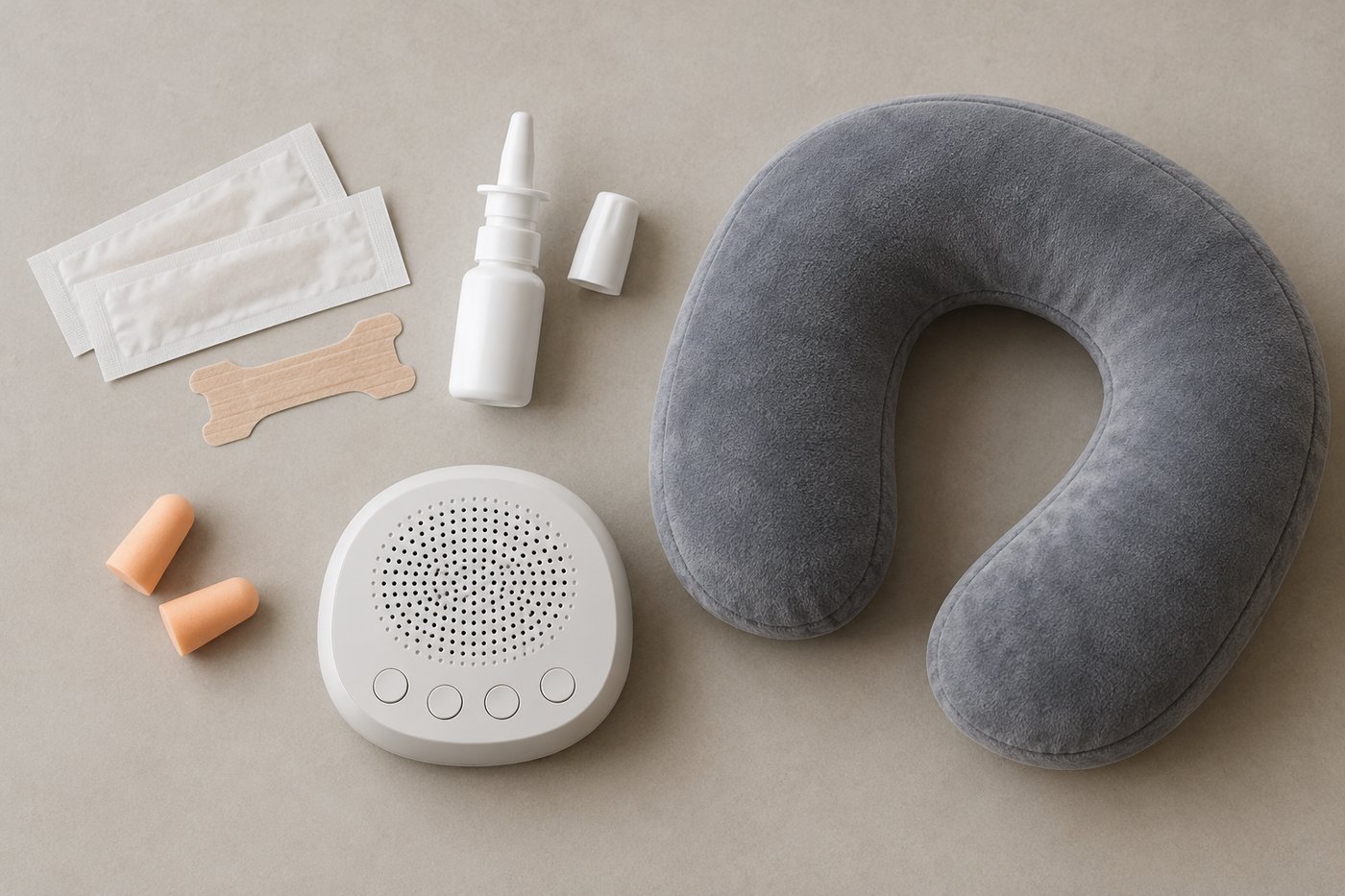
- Nasal stripsFine for a few nights. They kept peeling off around 3 a.m.
- Nasal sprayHelped when I was congested. Didn’t seem to matter when I wasn’t.
- A stack of pillowsLinda’s idea. I woke up with a stiff neck and still snored.
- Sleeping on my sideThe old tennis-ball-in-a-sock trick lasted about four nights.
- White noise and earplugsThese were for Linda. They helped her a little. They did nothing for me.
None of these are bad ideas, and any of them might be the right answer for you. They just weren’t mine.
What my dentist told me
I mentioned the whole thing at my regular cleaning, mostly as a joke. My dentist didn’t laugh. She asked a few questions and then said something I hadn’t heard before.
“There are devices that hold your lower jaw slightly forward while you sleep. They’re called mandibular advancement devices.”
The idea is simple. When we sleep, the muscles in the throat relax. If the lower jaw and tongue sit back, the airway narrows, and the air passing through can make the tissues vibrate. That vibration is the sound. A device that gently moves the lower jaw forward is meant to give that airway a little more room.
She said the custom versions made in a dental office can work well but are expensive. VitalSleep, the brand I eventually tried, says dentist-made appliances typically run $800 to $3,000. She also told me, and I’m passing it on, that these devices aren’t for everyone, especially people with jaw (TMJ) problems, loose teeth, gum disease or dentures. If that’s you, ask your dentist first.
The one I decided to try
I did some reading, and ended up with the VitalSleep Anti-Snoring Mouthpiece. A few reasons it stood out to me:
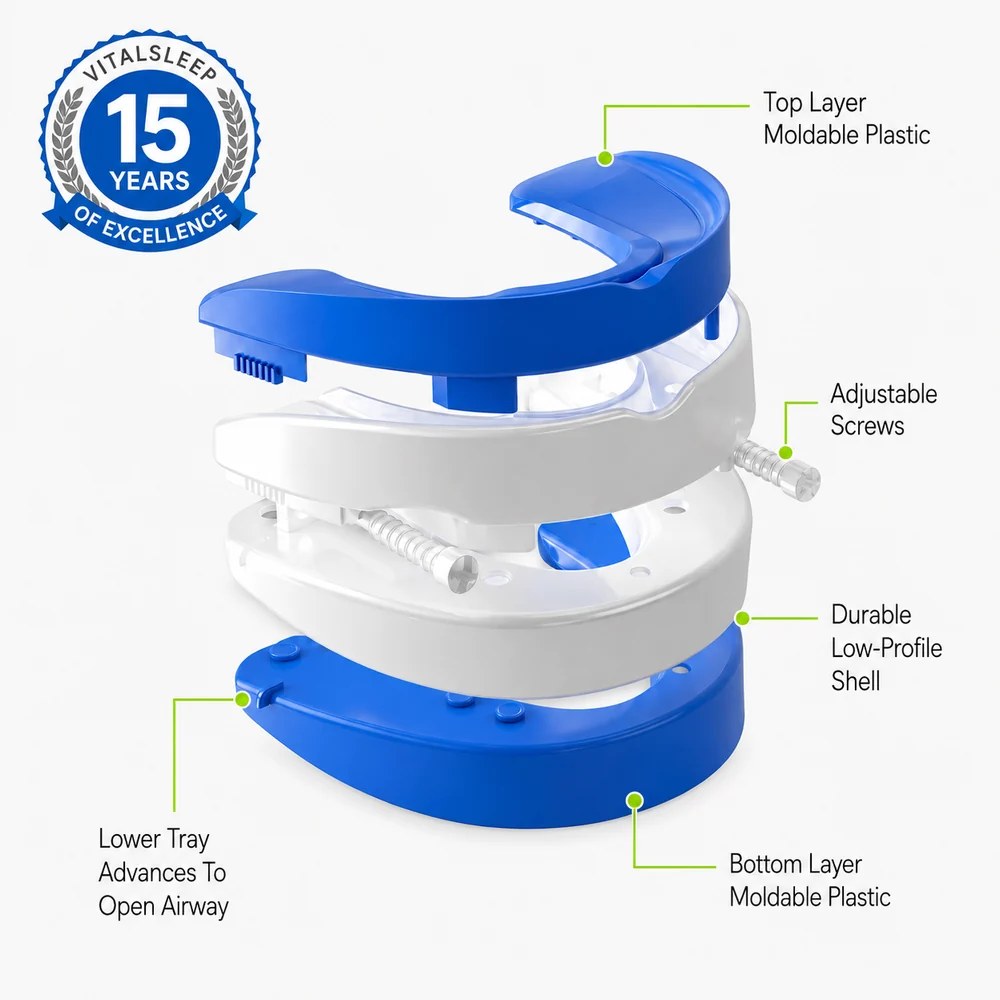
- It is adjustableThe brand calls its system “Accu-Adjust.” You can move the lower jaw forward from 0 to 8 mm in 1 mm steps, so you can find the position that is comfortable.
- It is boil-and-biteYou soften it in hot water and bite into it to mold it to your teeth. No dental appointment needed.
- It has no metalThe brand says it is BPA-free, latex-free and has no metal parts.
- It is cleared for snoringThe brand states it holds FDA 510(k) clearance (references K092942 and K201719 on their site) as an over-the-counter device for the reduction of snoring, and that it is not intended to diagnose or treat sleep apnea. Check the FDA database yourself for the latest status.
- The terms looked fairIt is a one-time purchase, no subscription, with a 60-night money-back guarantee.
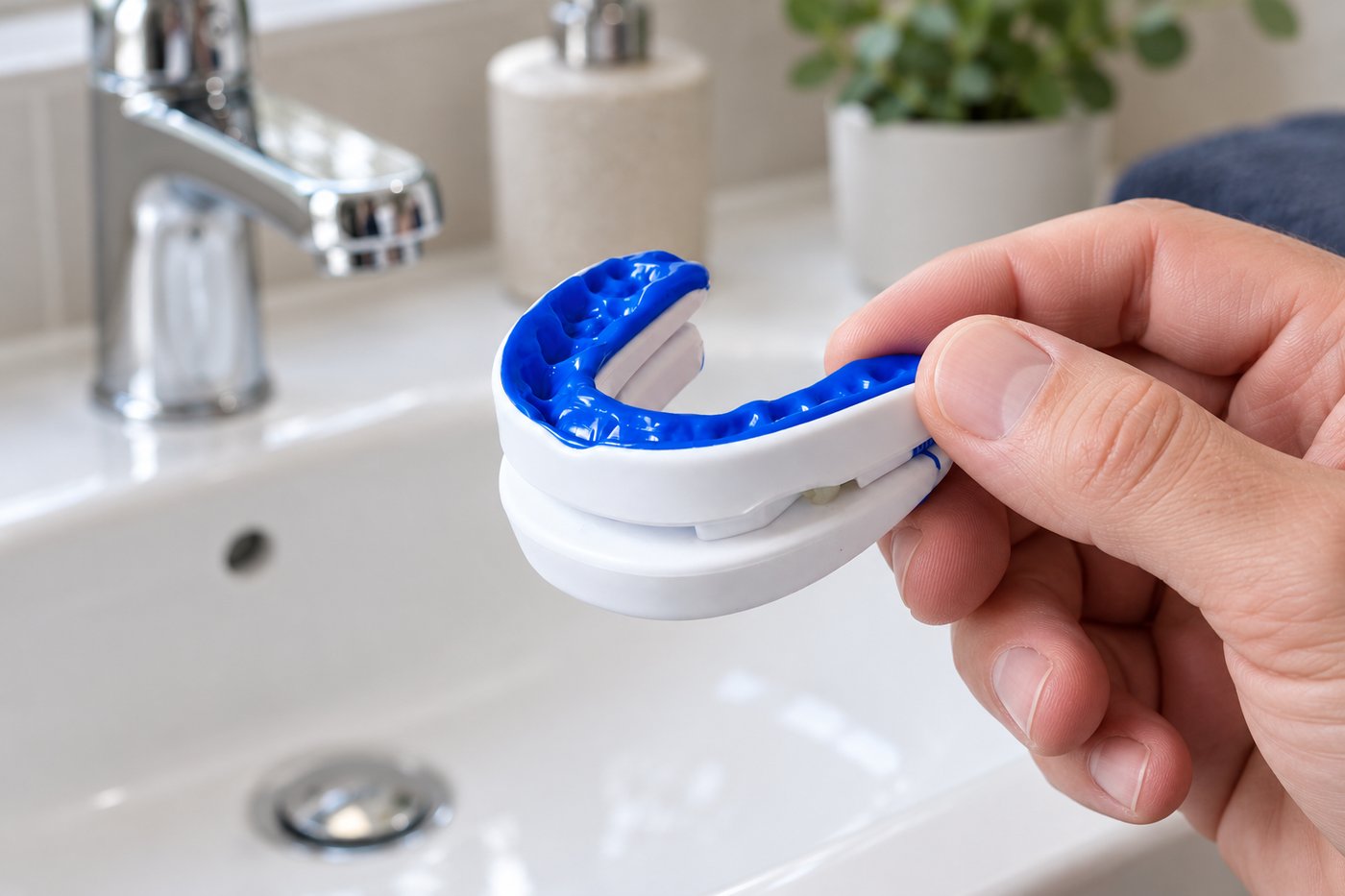
My first week was not glamorous
I’ll be honest, because I wish someone had been honest with me. The first couple of nights felt strange. I had a mouthful of plastic, I drooled on the pillow, and one morning my jaw felt a little tight.
The brand’s advice, which I followed, is to start at the lowest setting and move up in small steps only when you’re comfortable. If you feel persistent pain, notice changes in your bite, or your jaw locks, you’re supposed to stop using it and talk to a professional. I think that’s the right approach for any device like this.
By night five or six I barely noticed it. By the second week I was sleeping through.
What Linda said
On about day twelve, Linda was already up and making coffee when I walked into the kitchen. She looked at me and said, “I didn’t hear you last night.”
I asked if that was a good thing or if she hadn’t slept.
“I slept,” she said. “I actually slept.”
I won’t pretend it was magic. There are still nights when I snore a little, especially after a late dinner or a glass of wine. Everyone’s experience is different, and mine isn’t a guarantee of yours. But the pillow came back to our bedroom that week, and honestly, that was all I wanted.

Is this right for you?
I’m not a doctor and I can’t answer that for you. Here is the quick checklist I wish I’d had.
May be worth a look if…
- You or your partner would describe your snoring as loud or frequent
- A doctor has said there is no sign of sleep apnea, or you’ve been checked
- You’d like to try something at home before paying for a custom dental device
- You’re comfortable wearing a mouthpiece at night
Talk to a professional first if…
- You gasp, choke or stop breathing in your sleep, or you’re very sleepy in the daytime
- You have jaw (TMJ) pain, loose teeth, gum disease, dentures or major dental work
- You are under 18, or you are pregnant and unsure
- You have any other health concern about your breathing or sleep
What it costs, and the terms
Here is what the brand’s order page showed when I checked.
| Item | Shown on the order page |
|---|---|
| Price (one mouthpiece) | $119.95, or 4 interest-free payments of $29.99 |
| Purchase type | One-time purchase; the page says no subscriptions or recurring charges |
| Shipping | Free U.S. shipping; the page lists 2–4 business days |
| Guarantee | 60-night money-back guarantee |
| Warranty | 1-year warranty and replacement |
| Sizes | Standard and Small, with free size exchange |
Prices, offers and policies are set by the brand and can change at any time. The brand’s page words some of its guarantee and warranty terms in more than one way, so please read the return policy on the order page before you buy.
See the VitalSleep offer
You will go to the brand’s official site, where the current price, size options and the 60-night guarantee terms are shown.
- ✓60-night guarantee
- ✓Free U.S. shipping
- ✓One-time purchase
- ✓Standard & Small sizes
My advice, as someone who has been there
If your snoring is affecting your sleep, your partner’s sleep, or your relationship, don’t just laugh it off like I did. Get it looked at. Start with the basics: your doctor, your dentist, a sleep check if there are warning signs. Then, if a mouthpiece makes sense for you, it can be a reasonable, low-cost thing to try.
For me, it was the difference between a quiet house and a quiet bedroom, and I’ll take the bedroom.
Ready to take a look?
Review the current price, sizing and 60-night guarantee on the brand’s official site.
- ✓60-night guarantee
- ✓Free U.S. shipping
- ✓One-time purchase
- ✓Standard & Small sizes